Starting kayak fishing and not sure what gear you need? The good news: you do not have to buy everything at once. The bad news: without a few basics, it will be uncomfortable, inefficient and possibly unsafe on the water. In this guide we list everything you need for your first fishing season and explain why each item is on the list.
Life vest: investment no. 1
This is not up for debate. A life vest is always mandatory. For fishing, choose a PFD (personal flotation device) type vest that is comfortable when sitting in a kayak for many hours. The key features: a high back (it does not get in the way of the seat backrest), wide shoulder straps (they do not restrict paddling) and pockets for lures and small items.
In the VAKA Sport vest range you'll find Baltic Lifejackets and NRS you will find models made for paddle sports. Choose by your weight, not by color or price. A vest of the wrong size is almost as dangerous as no vest at all.
Rod holders: at least two
Trying to fish from a kayak without rod holders means holding the rod between your legs or laying it on the water when you need to change lures. It is uncomfortable, inefficient, and you risk losing the rod.
Two holders are enough to start: one for active fishing (mounted next to the seat, adjustable) and one for transport (mounted behind the seat, vertical). This lets you have two rods rigged with different lures and switch quickly depending on the situation.
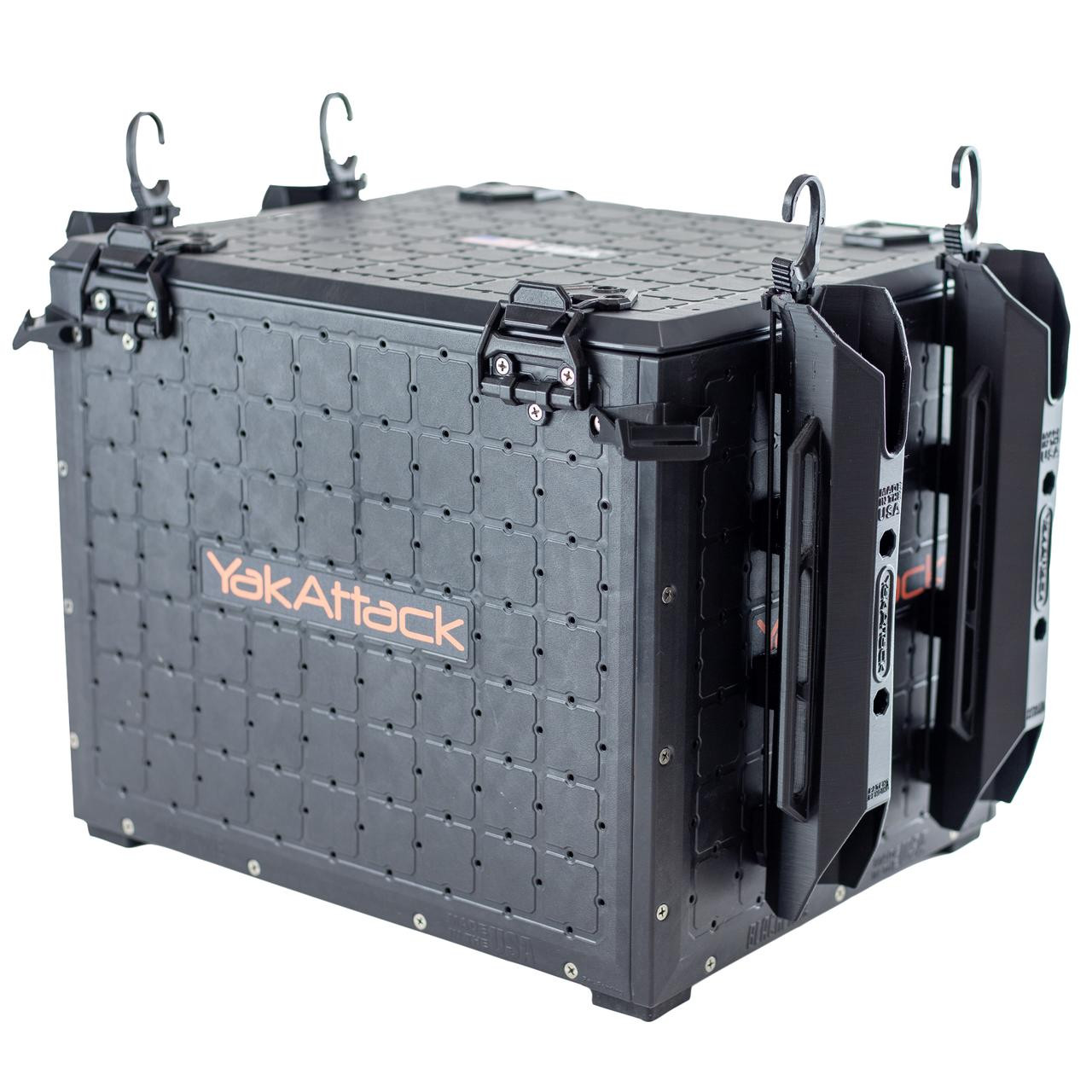
YakAttack Omega Pro is one of the most popular adjustable holders and fits most Track Rail systems. Railblaza The Rod Holder II is a versatile option with a StarPort mount. Both are easy to mount and remove without tools.
Anchor or stakeout pole
Wind is the kayak angler's enemy no. 1. Without an anchor or a holding system the wind pushes the kayak, and you spend half your time positioning instead of fishing.
Two options. A classic anchor (1.5 to 3 kg, with a line and YakAttack LeverLoc anchor trolley system) works at any depth. A stakeout pole (theYakAttack ParkNPole is the most popular) is a pole you push into the bottom in shallow water (up to 2 to 3 meters). The pole's advantage: it is silent and fast. The anchor's advantage: it works anywhere.
If you mostly fish lakes and shallow waters, start with a stakeout pole. If you fish rivers with current or deeper spots, invest in an anchor system with an anchor trolley.
Organizing your lures
Lures scattered around a kayak are a waste of time and nerves. When the fish are biting, the last thing you want is to dig through a messy bag looking for the right lure.
Use tackle bags with clear inner cases rather than hard tackle boxes. Bags fit the irregular spaces of a kayak better and do not slide. Keep one small box of your most-used lures that you can reach without getting up from the seat.
Organize lures by technique or conditions, not by color or size. For example: one case for topwater lures, another for jigs, a third for soft plastics. That way you quickly find the right lure for the situation.
Fish finder: do you need one from the start?
The short answer: no, but it helps a lot. A fish finder is not essential for your first season, especially if you fish familiar waters. But if you are serious about kayak fishing and plan to invest, a fish finder is what will change your results the most.
For beginners, a basic model such as the Garmin Striker 4 or Lowrance Hook2 4x is enough. They show depth, bottom structure and fish marks. That is plenty for the first 2 or 3 seasons. More expensive models with GPS, side imaging and live scope are great, but for a beginner they can be too much information.
To mount a fish finder on a kayak you need a mount (Track Rail or StarPort type), a transducer and a small battery. The whole system can be installed in an hour and does not get in the way of paddling.
Protection from the sun and the elements
On the water the sun is twice as strong because of the reflection. In a 6-hour fishing session without protection you can get a serious burn even on a cloudy day.
The essentials: SPF 50+ sunscreen (water-resistant), sunglasses with polarized lenses (they help you see under the water), and a wide-brimmed hat or a buff-style neck gaiter. Polarized glasses are not only protection but also a fishing tool, as they cut the glare off the water's surface and let you see fish, structure and obstacles under the water.
Dry bag and waterproof case
Your phone, keys, wallet and spare clothes need to be in a dry place. A 10 to 20 liter dry bag is big enough for everything you do not want to get wet. For your phone, use a separate waterproof case that lets you use the screen without taking the phone out.
Tether all your valuables to the kayak. Leashes for your phone, glasses and fish finder are a cheap insurance policy against losing them.
First season shopping list
Must-haves (buy before your first outing): a life vest, at least 2 rod holders, a dry bag, a waterproof phone case, sun protection (glasses, hat, sunscreen), a whistle.
First month (buy once you understand your style): an anchor or stakeout pole, a tackle bag for organizing lures, a kayak cart for transport, a kayak seat comfort upgrade (if the standard one is uncomfortable).
End of the first season (once you are sure this is your hobby): a fish finder with a mounting system, a Track Rail system for accessories, navigation lights (if you plan to fish early in the morning or in the evening), an anchor trolley system.
All the fishing gear and accessories mentioned in this guide can be found in the VAKA Sport store. If you are not sure where to start, get in touch. We will help you choose gear to suit your kayak, fishing style and budget.
Read also
- The 10 most common mistakes when starting kayak fishing (and how to avoid them)
- TOP 10 kayak modifications for fishing: from holders to electronics
- The best fishing kayak in Lithuania 2026: the complete guide
Frequently asked questions
What is the minimum gear needed for kayak fishing?
The minimum gear: a life vest, at least 2 rod holders, a dry bag for your belongings, a waterproof phone case and sun protection. Without these things it will be unsafe or uncomfortable on the water.
Is a fish finder essential for beginners?
No, a fish finder is not essential for your first season. Start with the basic gear and invest in a fish finder once you are sure kayak fishing is your hobby. Basic models such as the Garmin Striker 4 are a good first choice.
What is the difference between an anchor and a stakeout pole?
An anchor works at any depth and is used with a line and an anchor trolley system. A stakeout pole is a pole you push into the bottom, but it only works in shallow water up to 2 to 3 meters. The pole is quieter and faster, the anchor more versatile.
Recommended products
The most popular products in this category