A fish finder on a kayak changes the game. Instead of guessing where the fish are, you see the exact bottom, depth changes, weed and where the fish are holding. But mounting a fish finder on a kayak is different from mounting one on a motorboat. Here is what you need to know before you buy.
Is it worth putting a fish finder on a kayak?
Short answer: yes, if you fish regularly. A fish finder helps you find schools of fish, understand the bottom structure and identify the best spots. It is especially useful on big waters like the Kaunas Lagoon or Lake Plateliai, where fish can be concentrated in specific places.
A kayak fish finder differs from boat models in a few ways: it is more compact, runs on a smaller battery and often has a dedicated kayak mount. There is no need to buy the most expensive model. A basic fish finder with 2D sonar and GPS costs from 200 to 400 EUR and is more than enough for most anglers.
Which types of fish finder suit a kayak?
Basic 2D sonar. Shows the bottom, depth and fish arches under the kayak. The simplest and cheapest option. Good for anyone starting out with a fish finder who wants to understand the bottom structure.
Down Imaging. Gives an almost photographic view of the bottom. You see rocks, fallen trees, weed and fish shapes far more clearly than with basic 2D sonar.
Side Imaging. Scans the bottom not only directly under the kayak but also to the sides (up to 30 to 50 m each way). It lets you survey a large area quickly and find promising spots. A more expensive technology, but very effective on big waters.
Castable wireless fish finders. A small transmitter you cast into the water like a float. Data is sent to your phone over Bluetooth. The cheapest and simplest option, but with limited depth (up to 40 to 50 m) and no GPS marking. Good for beginners and for fishing from the shore.
How do you mount a fish finder on a kayak?
Mounting on a kayak is easier than it looks. There are a few popular ways:
Railblaza mounting system. If your kayak has Railblaza ports (many fishing kayak have them from the factory), you can mount the fish finder screen with a Railblaza StarPort adapter. It is the quickest and cleanest way, with no drilling.
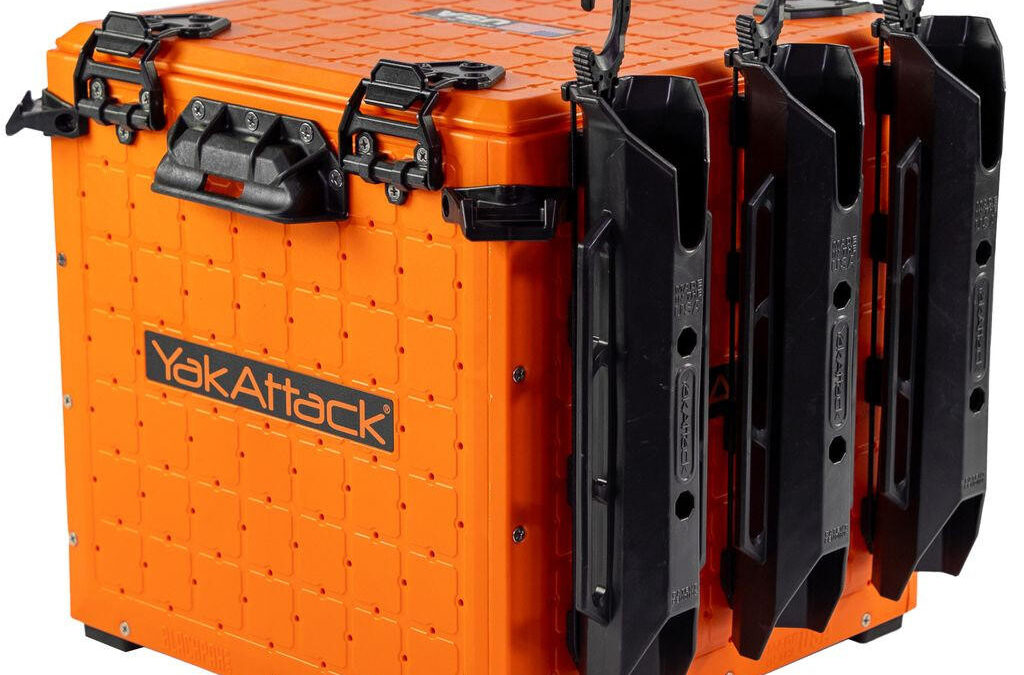
YakAttack mounts. YakAttack makes dedicated fish finder and battery holders for kayaks. Their Mighty Mount and CellBlok systems let you mount the fish finder, battery and cables neatly, with no loose wires hanging around.
RAM Mount system. Universal RAM mounts with swivel and tilt adjustment. They fit any fish finder model and most kayaks.
Transducer mounting. The transducer can be mounted in a few ways: glued to the inside of the hull (it sends the signal through the plastic), attached to a scupper hole adapter, or fitted on a portable arm that hangs over the side of the kayak.
For more on Railblaza and YakAttack accessories read our accessories guide.
What battery do you need?
Most kayak fish finders run on a 12V battery. There are a few options:
- Lithium iron phosphate (LiFePO4) : the lightest and longest lasting. A 6 to 9 Ah battery weighs about 0.8 to 1.2 kg and runs a fish finder for 8 to 12 hours. The best choice for a kayak, where weight is critical.
- Sealed lead acid (SLA) : cheaper but much heavier (3 to 5 kg for the same capacity). Fine if your budget is tight and weight is not critical.
- Portable power station (power bank) : some fish finders can run via USB or a 12V adapter from a high capacity power bank. A versatile option that also works for other devices.
Keep the battery in a waterproof case or a dedicated holder (the YakAttack CellBlok is a popular choice). Water and electrical connections must not meet.
What other electronics does a fishing kayak need?
Besides a fish finder, a fishing kayak benefits from:
- GPS marking : many fish finders have built in GPS. It lets you mark fish spots and routes and return to the same places next time.
- Anchor or Stake Out Pole : lets you hold position and fish without drifting. Railblaza have dedicated anchor mount solutions.
- Rod holders : saltwater resistant, with 360° rotation. Flush mount holders are built into the kayak, while rod holder types such as YakAttack Omega Promount on Railblaza or YakAttack tracks.
- LED lighting : for fishing early in the morning or late in the evening. Red LED light does not dazzle your eyes or spook the fish.
If you are planning more serious kayak fishing, read our guide How to choose a fishing kayak.
Frequently asked questions
Safety on the water
Always wear a life jacket. For fishing we recommend NRS Chinook Fishing PFD : it has pockets for tools and rod holder slots, so it does not get in the way when fishing. For more on safety gear, read our life jacket comparison.
Is a cheap fish finder worth it?
Yes, even a basic 2D fish finder for 200 to 300 EUR will show you depth, bottom structure and fish arches. That is already far more information than fishing blind. Advanced features like Side Imaging are great but not essential for beginners.
Does a fish finder work through the kayak hull?
Yes, many transducers can send and receive a signal through the HDPE plastic of a kayak if glued to the inside of the hull with a special gel. Signal quality is slightly lower than with the transducer in the water, but good enough for most fishing situations. On a sit on top kayak the transducer can also be mounted through a scupper hole or on a YakAttack SwitchBlade transducer deployment arm.
How much does a complete fishing electronics setup for a kayak cost?
Minimum budget: fish finder 200 to 400 EUR + LiFePO4 battery 80 to 150 EUR + mounting system 30 to 60 EUR = 310 to 610 EUR. Premium option with Side Imaging and GPS: 500 to 1000 EUR + battery + mounts = 650 to 1250 EUR. Wireless castable fish finder (basic option): 80 to 200 EUR with no extra mounts.
What you will need for mounting
A fish finder on a kayak needs three things: a screen mount, a transducer mount and a base for everything to attach to. Here is what we use ourselves.
- NuCanoe LockNLoad fish finder screen mount : the screen stays visible and does not get in the way of paddling
- NuCanoe fish finder transducer system kit : transducer mounting with no drilling in the hull
- RAILBLAZA StarPort : a universal base for mounts
Read also
- Fish finder on a kayak: how to choose, mount and use one (2026)
- TOP 10 kayak modifications for fishing: from holders to electronics
- The best fishing kayak in Lithuania 2026: the complete guide
Recommended products
The most popular products in this category