
Buying a kayak is easy. The harder part is working out how to get it to the water and where to keep it over winter. Transport and storage are the two most overlooked questions, and later they cause the biggest headaches. Here are practical solutions for every situation.
Read also: How to choose a kayak, Where to kayak in Lithuania.
How do you carry a kayak on a car roof?
The most common way is a roof rack with kayak carriers. You need two things: crossbars that attach to the roof, and kayak carriers (J rack or saddle type) that attach to the crossbars.
J style carriers are the most popular because the kayak sits on its side and takes up less roof space. You can fit two kayaks on one roof with J carriers. They suit sit on top and sit in kayaks up to about 35 kg.
Saddle carriers hold the kayak flat, hull down. They are more stable and suit heavier kayaks, but take up more roof space. Better for longer touring and fishing kayaks.
Foam pads are the cheapest option. They sit directly on the roof and the kayak is held down with straps. Fine for occasional use and short distances, but not as safe as proper carriers.
Transport accessories can be found in our transport category.
How do you get a kayak from the car to the water?
It is often 50 to 200 metres from the car park to the water. Carrying a 25 to 35 kg kayak that far by hand is not easy, especially over grass or sand.
A kayak trolley is the best solution. It is a two wheeled cart that clips onto the end of the kayak. You can roll the kayak with one hand even over rough ground. After use the trolley folds up and goes into the kayak's storage hatch.
Carry straps are an alternative for shorter distances. Dedicated straps spread the weight over your shoulders instead of your arms. Good for lighter kayaks (up to 25 kg).
If you often paddle alone and your kayak is heavy, a trolley is an essential accessory, not a luxury. In our accessories guide you will find more transport solutions.
What if I do not have a roof rack?
Three alternatives:
- Inflatable kayak : fits in the car boot. It is the simplest transport solution. Read our inflatable kayak guide.
- Packraft : fits in a backpack, so you can even take it on public transport. Packraft overview.
- Kayak trailer : if you have several kayaks or paddle with a group. The most expensive but most convenient option for hardshell kayaks.
How do you store a kayak at home?
A hardshell kayak needs space. An average kayak is 300 to 400 cm long, so it takes up a fair amount of room in a garage, shed or under a roof. A few key storage rules:
Keep it out of direct sunlight. UV is the main enemy of HDPE plastic. After a few years outdoors a kayak starts to fade and the plastic weakens. It is best kept under a roof, in a garage or covered with a UV resistant cover.
Do not keep it on the ground. A kayak lying on a flat surface for a long time can deform under its own weight. Ideally it should hang on a wall rack or rest on two supports that hold it by the sides.
Wall racks are the most efficient solution for a garage. Two J shaped brackets on the wall hold the kayak upright and take up minimal space. From 30 EUR a pair.
Ceiling hoists suit garages with high ceilings. The kayak hangs flat under the ceiling and takes up no floor space at all. They also work for bikes, SUP boards and other long items.
How do you prepare a kayak for winter?
Before a long storage period (October to March), do the following:
- Rinse with fresh water. Remove sand, mud and salt (if you paddled at sea). Clean the scupper holes and mount fittings especially well.
- Dry it. Moisture encourages mould. Leave the kayak upside down for a few hours so all the water drains out.
- Check and repair. Any scratches, cracks or loose parts? Better to fix them now than in spring.
- Remove accessories. The seat, paddle holder, fish finder cables: anything that can collect moisture or freeze.
- Cover it or bring it indoors. A kayak should not stand outside all winter without protection.
You will find a full winter plan for a kayak, an inflatable board and accessories in our guide on how to prepare a kayak and SUP board for winter.
Inflatable kayaks are easier to store: let the air out, dry them, roll them up and put them in the bag somewhere dry. Do not roll too tightly so the material does not crease in the same places.
Recommended transport accessories
At VAKA Sport we offer transport accessories for kayaks: kayak trolleys and mounting systems. The most popular choice is the C-Tug kayak trolley, which folds down and fits inside the kayak.
Weight: what you need to know
Fishing kayaks weigh from 27 kg (NuCanoe Flint) to 40 kg (NuCanoe Unlimited). That is an important factor if you will have to carry it to the water on your own.
- Up to 30 kg : one person (with the right technique) can lift it
- 30–40 kg : two people or a trolley recommended
- Kayak trolley : cheap (~30 to 50 €) and very useful when you need to get the kayak to the water
Safety on the water
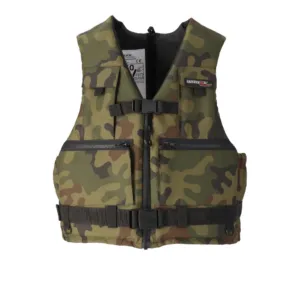
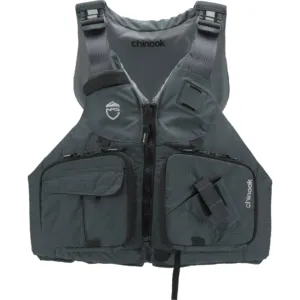
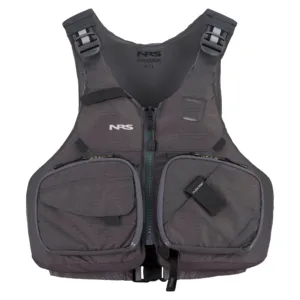
Always wear a life jacketwhen kayaking. For recreational paddling, light and comfortable WALLYS buoyancy aids are a great choice: they do not restrict movement and are affordable. We offer sizes for children and adults based on body weight. More about safety gear: life jacket comparison.
Frequently asked questions
How fast can you drive with a kayak on the roof?
With proper carriers and tie downs it is recommended not to drive faster than 100 to 110 km/h. On a longer trip, check the tie downs after the first 20 km, as straps can loosen slightly. Always use extra safety lines (bow and stern lines) attached to the front and back of the car.
Can you keep a kayak outside all year round?
It is not recommended. UV and temperature swings shorten a kayak's life. If you have no other option, cover the kayak with a UV resistant cover and protect it from direct sun and rain. That will add at least a few years to its life.
How much space do you need to store a kayak in a garage?
With wall racks a kayak takes up about 40 cm of wall depth and 300 to 450 cm of length (depending on the model). With ceiling hoists you need no floor space at all. An inflatable kayak in its bag takes up about 80x40x30 cm, so it would fit on a large wardrobe shelf.
For transport and storage
Getting the kayak from the car to the water is the most common hurdle. Wheels remove it.
- C-TUG Railblaza wheels : comes apart, fits inside the kayak
- NRS Yak Yak ratukai : simple design
- Galaxy Kayaks tie down straps : for roof mounting
Recommended products
The most popular products in this category