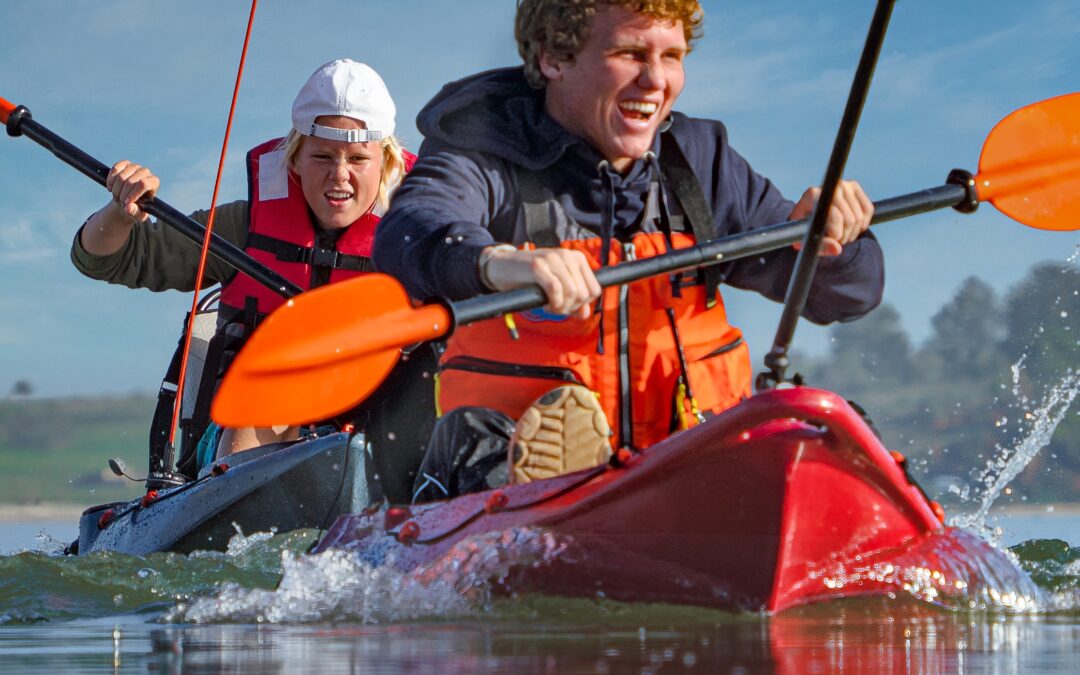
Kayak fishing is quickly gaining popularity in Lithuania. The reason is simple: a kayak lets you reach places you cannot get to from the shore or with a big boat. Shallows, reed beds, islets, river bends. And all of it without fuel, registration or noise. Below is all the information you need to start fishing from a kayak.
Why is kayak fishing better than fishing from the shore?
From the shore you can only reach as far as your rod and cast allow. With a kayak you can paddle to any spot on a lake or river. Catfish holes by sunken trees, pike territory among the reeds, perch shoals over underwater humps. Everywhere fish hide from the pressure of shore anglers.
On top of that, a kayak is quiet. No engine noise, no wake. You can glide quietly up to your spot without spooking the fish. This is especially important when fishing for tench, bream or other wary fish in shallow water.
Which kayak is right for fishing?
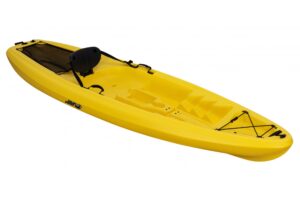
Fishing calls for a kayak made for the job. The main differences from a touring kayak: stability (you can stand up or land a fish without feeling you are about to tip over), rod holders, a rail system for accessories, and space for crates and gear.
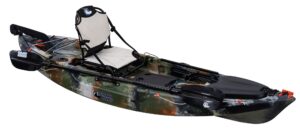
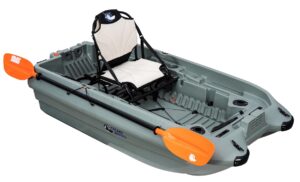
The fishing kayaks we sell from NuCanoe, Galaxy Kayaks, Bonafide and Native Watercraft have all of this straight out of the box. The most popular models among Lithuanian anglers: the NuCanoe Flint (compact, 27 kg, easy to transport), the Galaxy Kayaks Wildcat (with built in wheels), and the Bonafide SS127 (top class stability).
What gear do you need for kayak fishing?
Besides the kayak and a rod, you need a few things that make fishing comfortable and safe:
A life jacket is mandatory. We recommend 50N buoyancy aids, which do not restrict your arm movement when holding a rod and landing a fish.
Rod holders let you keep several rods ready at the same time. Most fishing kayaks have built in holders, but you can add more via the Railblaza or YakAttack rail system.
Watertight bag for your phone, documents and keys. Dry bag is a must on every trip.
Anchor or a stake out pole lets you hold the kayak in position at your fishing spot so the wind or current does not carry you away.
Where to fish from a kayak in Lithuania?
You can fish from a kayak on almost any Lithuanian lake or river. The most popular spots among kayak anglers: the Kaunas Lagoon (large areas, pike, catfish), Lake Sartai (perch, pike), the Nemunas and its tributaries (catfish fishing).
You must have a valid fishing licence. You can buy one through the ALIS system or the Mano žvejyba app. The licence is valid for a specific body of water.
Safety tips for kayak fishing
Kayak fishing is a safe activity if you follow a few rules: always wear your jacket, tell someone where you will be fishing and when you plan to be back, watch the weather forecast (especially the wind) and keep your phone in a waterproof bag. If you fish in the cold season, wear a drysuit.
Frequently asked questions
Safety on the water
Always wear a life jacket when kayaking. For fishing we recommend NRS Chinook Fishing PFD : it has pockets for tools and rod holder slots, so it does not get in the way when fishing. For more on safety gear, read our life jacket comparison.
Can you stand up in a fishing kayak?
Yes, you can stand in the wider fishing models. NuCanoe kayaks have the widest deck on the market and are designed specifically for stand up fishing. The Galaxy Kayaks Wildcat and Bonafide SS127 also let you stand comfortably.
Do you need to register a kayak for fishing?
No. In Lithuania a kayak needs neither registration nor a licence. You only need a fishing licence, which is valid for a specific body of water.
What is the minimum kayak size for fishing?
For fishing we recommend a kayak at least 300 cm long and 80 cm wide. Smaller models will be unstable when landing a fish or using extra gear. The NuCanoe Flint (305 cm) is one of the most compact fishing kayaks that still has all the functionality you need.
Read also: Kayak or baidarė: the differences and which to choose, Inflatable kayaks: pros and cons.
Read also: Kayak or baidarė: what is the difference, Inflatable kayaks: pros and cons.
Recommended products
The most popular products in this category