Kayak, baidarė, canoe. In Lithuania we use these three words almost as synonyms. But they mean three different boats with different construction, seating position and purpose. This guide will help you understand the real differences and choose the option that best fits your needs.
Read also: How to choose a kayak, SUP or kayak: which to choose.
What is what: three different boats
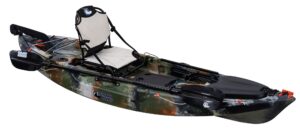
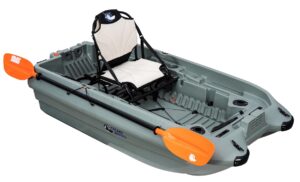
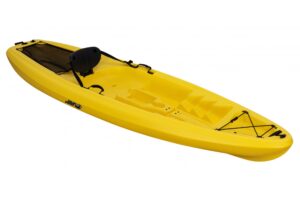
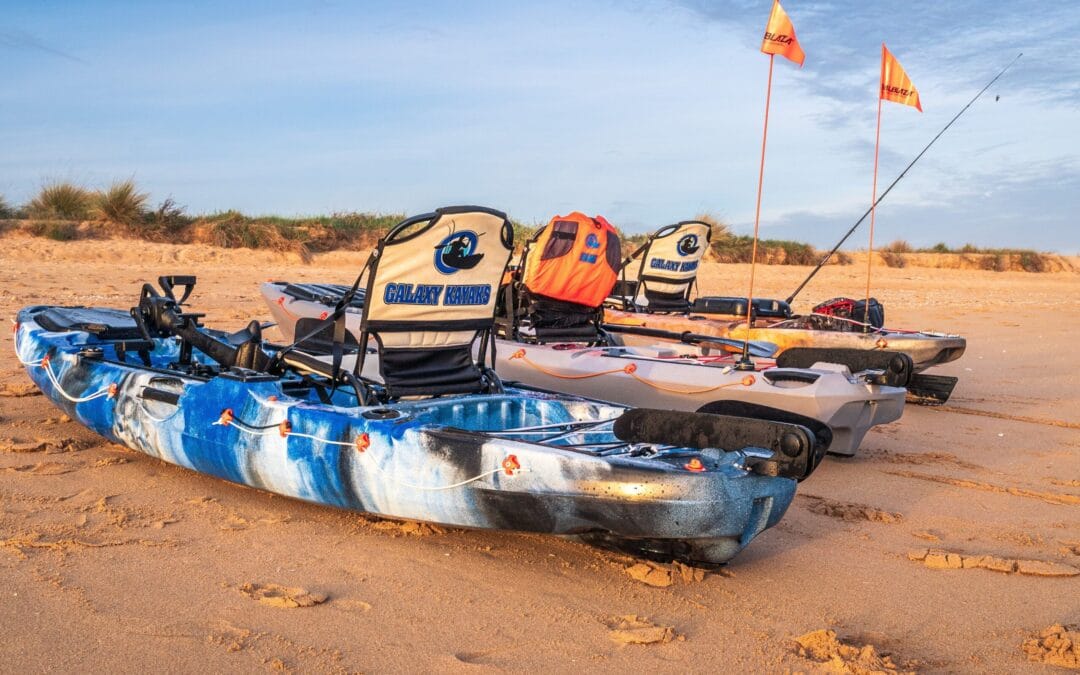
Kajakas (sit-on-top kayak) is a modern open deck boat where you sit on top rather than inside. The seat is raised and your legs are free. The deck has drainage holes (scupper holes) that drain off water from paddle drips or spray, but on calm water the deck stays practically dry. You paddle with a double bladed paddle. A key feature: the hull of a sit on top kayak is sealed and filled with air, so it will not sink even if it capsizes far from shore. It is the most popular choice for fishing, leisure and family paddling. These are exactly the kayaks made by Galaxy Kayaks, Bonafide and other modern manufacturers.
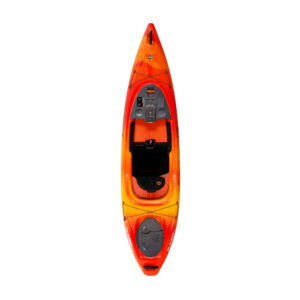
Baidarė (sit in kayak) is a boat with a closed cockpit where you sit low, practically on the floor, with your legs stretched out under the deck. You paddle with a double bladed paddle. Most recreational sit in kayaks (especially the two seaters rented on Lithuanian rivers) have an open cockpit with no spray skirt. A spray skirt (spraydeck) is only used on sea and touring kayaks, when paddling through waves and the cockpit needs protecting from water. This is the classic boat offered by rental bases on the Žeimena, Ūla or Merkys, and the one most Lithuanians simply call a baidarė. In our range of this type we have, for example, the Wilderness Systems Pungo 105 for recreation and the Tsunami 125 for longer trips.
Canoe is a fully open boat with a high seat (bench) or a kneeling position. You paddle with a single blade paddle, switching sides. It comes from the tradition of the indigenous peoples of North America. In Lithuania canoes are less common, but they have their niche on long expedition trips with heavy loads.
When a rental base or a friend offers you a baidarė, 95% of the time it will be a sit in kayak with a closed cockpit. When you see a kayak in a shop, it is usually a sit on top model. Canoes in Lithuania are mostly found only at specialist rentals or among enthusiasts.
A short history: from sealskin to polyethylene
The sit in kayak is a direct descendant of the qajaq of the Arctic peoples. The Inuit, Aleut and Yupik created it more than 4000 years ago for hunting on open water. The word qajaq means hunter's boat. Each one was built individually to fit the owner's body from a wooden frame and sealskin. The Smithsonian museum in Washington displays a qajaq handmade by the Greenlandic craftsman Maligiaq Padilla, continuing a thousand year old tradition.
The modern sit on top kayak appeared in the second half of the 20th century, when manufacturers began using rotomoulded polyethylene. The open deck design was created for warmer climates, where a closed cockpit is not necessary. It quickly evolved from a leisure boat into a specialised platform for fishing, recreation and sport.
The canoe is even older. The oldest known example, the so called Pesse canoe from the Netherlands, dates to around 8000 BC. The birch bark canoes of North America's indigenous peoples became the model for modern manufacturers.
As Brian Day, who has worked in the paddlesports industry for more than 30 years and now represents Wenonah Canoe, puts it, kayaks and canoes are similar, but each has advantages and drawbacks that can make a big difference to what you do on the water.
The key differences: sit on top kayak, sit in kayak and canoe
Here is a side by side comparison of the three boats:
| Feature | Kajakas (sit-on-top) | Sit in kayak (baidarė) | Canoe |
|---|---|---|---|
| Construction | Open deck, you sit on top | Closed cockpit, you sit inside | Fully open hull |
| Seating | Raised seat, legs free | Low on the floor, legs under the deck | On a bench or kneeling |
| Your paddle | Double bladed | Double bladed | Single blade |
| Water protection | Sealed hull, does not sink; spray drains out through scupper holes | The cockpit can fill with water; spray skirt only on sea kayaks | Waves can swamp the open hull |
| Stabilumas | Very good, wide hull | Medium, narrower hull | Good on calm water |
| Greitis | Medium | Fastest (narrow, long shape) | Slowest |
| Manevringumas | Good, especially shorter models | Very good on moving water | Needs more technique |
| Getting in and out | Very easy, like sitting on a bench | Harder, you have to slide into the cockpit | Easy, but with a higher side |
| Capsizing | Easy to get back on (just climb on); the kayak does not sink | You have to get out and bail the water; without a spray skirt it can sink | Hard to right in the water |
| Cargo capacity | Medium (open deck + hatches) | Limited (through hatches under the deck) | Large (open hull) |
| Transport | 25 to 40 kg, on a car roof | 15 to 25 kg, lighter | 25 to 40 kg, longer, but carried on the shoulders with a yoke |
| Learning curve | Easiest for beginners | Medium (takes some getting used to) | Hardest (single blade paddle) |
Sit on top vs sit in: the main question
This is the comparison most people are really looking for. Both boats are paddled with a double bladed paddle, and both are kayaks in the broad sense, but the experience on the water is very different.
Seating comfort
On a sit on top kayak you sit higher with your legs free, so you can stretch them, bend them or even dangle them in the water whenever you like. On longer trips you can change position. This matters especially for people with back or knee problems.
In a sit in kayak you sit low on the floor with your legs stretched out under the deck. The position is fixed and restricted. Some people find it cosy and safe, others start to feel their legs go numb after an hour. Getting out quickly is harder than with a sit on top.
Stability and safety
Modern sit on top kayaks are designed with a wide, stable hull. On some models, such as the Galaxy Reef Tandem, you can even stand. Importantly, a sit on top kayak is unsinkable. Its hull is sealed and filled with air, so even if it capsizes far from shore it stays on the surface. If you fall off, you just climb back on.
A sit in kayak is narrower and faster, but less stable. If a recreational sit in kayak capsizes (without a spray skirt, as is most common on Lithuanian rivers), water floods the cockpit and the boat can sink. That is a more serious danger than with a sit on top. Sea kayaks with a spray skirt do not have this problem, but then a capsize means an Eskimo roll or a wet exit underwater. Either way, it is more stressful for beginners than a sit on top.
Staying dry vs freedom
In a sit in kayak you sit lower, so the wind affects you less and the cockpit protects you from spray. In sea kayaks with a spray skirt you stay completely dry even in waves. In recreational models (without a skirt, like the ones rented on Lithuanian rivers) you still feel more sheltered from wind and cold than on the open deck of a sit on top.
On a sit on top kayak you stay fairly dry on calm water. Water only gets onto the deck from paddle drips or the odd splash, and it drains away through the scupper holes. In waves or stronger wind the deck gets wetter. In summer that is actually pleasant, but in late autumn or early spring you need the right water sports clothing.
Speed vs versatility
A sit in kayak is faster thanks to its narrower hull and lower profile. It is more efficient for long river trips. Experienced paddlers will reach higher speeds in a sit in kayak with less effort.
A sit on top kayak is more versatile. You can fish from it, paddle with your family, or use it as a platform for photography, snorkelling or just relaxing on the water. It is not as fast, but it does a lot more.
Which boat to choose for your activity?
Fishing
Here the sit on top kayak wins hands down. Modern fishing kayaks have built in rod holders, fish finder mounts and a large stable platform you can stand on. Some models have pedal systems that let you steer with your feet and keep both hands free for fishing. You will find the full selection in our fishing kayaks section.
You can fish from a sit in kayak, but it is awkward: you sit low, there is not enough room for rods, you cannot stand, and every fish you bring in over the cockpit rim brings water inside. More about kayak fishing in our fishing guide.
Touring and river trips
Here the sit in kayak is strong. On Lithuanian rivers (the Žeimena, Ūla, Merkys) it is the classic choice for good reason. It is faster, better protected from spray and wind, and more efficient over long distances. The closed design also lets you paddle in cooler weather.
However, kayak touring on a sit on top also works very well, especially for day or weekend trips in summer. A sit on top is more stable, easier to get on and off at every stop, and you do not have to worry about capsizing.
In this category the canoe only shines on long multi day trips, when you are carrying camping gear and food for several days. The open design makes it easy to load and unload big bags.
Family fun
For families with children a sit on top kayak is the safest choice. A wide, stable hull, easy getting on and off, and no risk of being trapped in a cockpit if it capsizes. Tandem kayaks (for example the Galaxy Reef Tandem) have a third spot in the middle for a child or a pet. Galaxy Kayaks Reef Tandem is the most popular family choice in our range.
With a small child a sit in kayak is trickier: the child sits low, sees little and cannot move freely. On top of that, if the boat capsizes, the child ends up underwater inside a closed deck. Read more about water sports with children in a separate guide.
Sport and fitness
All three options give you a great workout. Double bladed paddling (sit on top and sit in kayaks) works both arms, the shoulders, back and core evenly. A canoe's single blade paddle works the side muscles more. Paddling at moderate intensity burns about 300 kcal an hour (for a 70 kg person).
The sit in kayak has the edge here: a narrower hull and more efficient shape mean more energy goes into speed rather than stability. That is exactly why experienced athletes choose sit in models.
Open water: the sea and big lakes
For big waters with waves and wind, a touring sit in kayak is the best choice. The low profile reduces the effect of the wind, the closed design with a spray skirt keeps the waves out, and the long narrow shape gives speed and tracking. A classic boat of this type is the Wilderness Systems Tempest 165.
A sit on top kayak also works on open water, but the wind catches its higher profile more and waves splash over the deck. Shorter recreational models are not ideal for the sea, but longer touring sit on top models do well.
A canoe is vulnerable on open water with waves. Its high profile acts like a sail, and waves can swamp the open hull.
For beginners: where to start?
For most beginners a sit on top kayak is the easiest start. Stability, easy boarding and no capsize stress. Within 15 minutes most newcomers feel confident. The most affordable quality sit on top kayak in our range is the Galaxy Reef Adult (299 EUR): stable, light (18.5 kg) and with a paddle included.
A sit in kayak takes a little more courage: you need to get used to sitting low, to the feel of the cockpit and to the idea that a capsize is more complicated. But once you are used to it, it rewards you with speed and efficiency.
Here is a simple rule of thumb:
Choose a sit on top kayak if: you want to fish, you will paddle with family or children, you value stability and simplicity, you want a versatile boat for leisure and fun, or you have back or knee problems (a higher seat is more comfortable).
Choose a sit in kayak if: you are planning long river trips, you want speed and efficiency, you will paddle in cool weather or on open water, you value staying dry and sheltered from the wind, or you already have paddling experience.
Choose a canoe if: you are planning multi day expeditions with camping, you need to carry a lot of cargo, or you will paddle as a pair on calm water.
The best all round advice: rent before you buy. A few hours on the water will tell you more than any article. You will find more tips in How to choose your first kayak and 5 most common beginner mistakes.
What about inflatable models?
Both sit on top and sit in kayaks are now also made in inflatable versions. Inflatable kayak fits in a backpack, weighs 15 to 25 kg and can be ready for the water in 10 minutes. Modern drop stitch models are surprisingly stiff and durable. In our range these are the NRS Akamai 110 and the longer NRS Akamai 145.
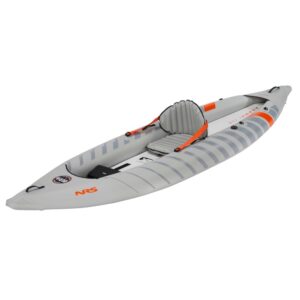
This is a great option for anyone without a garage or who wants to take a boat on holiday. Most inflatable models are sit on top, but inflatable sit in kayaks also exist, for example the NRS Aster Packraft XL.
Video: sit on top vs sit in at a glance
If you want to see the differences in action, we recommend this video, which clearly shows the main differences between sit on top and sit in boats:
Kayaking in Lithuania: why sit on top is gaining ground
For a long time the Lithuanian paddling tradition was all about the baidarė (sit in kayak). Hundreds of Lithuanians head down the Žeimena or Ūla in classic sit in kayaks every summer. But over the last decade things have been changing.
Fishing. The sit on top fishing kayak has opened up a whole new way of fishing. You can glide quietly up to productive spots, stand on a stable platform, and mount a fish finder and rods. That is impossible in a sit in kayak. More in our fishing kayak guide.
Independence. A kayak does not need a crew. One person can load it onto the car, drive to the lake and be on the water within minutes.
Versatility. A modern sit on top kayak is good for fishing, touring, sport, photography and family time. One boat, lots of possibilities. See our Galaxy Kayaks model guide, where you will find options for every need.
Safety. For families with children a sit on top kayak is safer than a sit in. A capsize is no drama, and the stability lets even small children feel confident.
Frequently asked questions
Are a baidarė and a kayak the same thing?
Yes and no. In the broad sense a baidarė is a type of kayak (a sit in kayak with a closed cockpit). But in Lithuania the word kajakas usually means a modern sit on top model, while baidarė means a classic sit in model. They are two different boats with different construction, seating position and purpose.
Which is more stable: a sit on top or a sit in kayak?
A sit on top kayak is more stable thanks to its wider hull and lower centre of gravity. On many models you can even stand. A sit in kayak is narrower and feels less stable, especially for beginners.
Can you fish from a sit in kayak?
You can, but it is awkward. Dedicated sit on top fishing kayaks have rod holders, fish finder mounts, stable platforms to stand on and an open deck that makes handling fish easy. A sit in kayak has none of these features.
How much does a kayak cost in Lithuania?
Prices range from 300 to 500 EUR for an entry level inflatable model to 3000+ EUR for a professional fishing kayak. A good recreational kayak costs 700 to 1500 EUR on average. You will find the full range in the VAKA Sport kayaks section.
Do you need a special permit to paddle a kayak or canoe in Lithuania?
No. You do not need any special permit or licence for a sit on top kayak, a sit in kayak or a canoe in Lithuania. It is recommended to wear a life jacket and follow the rules for using inland waters. You will find our life jackets in the safety gear section.
The verdict
There is no single right answer. Each boat has its own strengths.
The sit in kayak shines on long river trips, in cool weather, when you need speed and efficiency, and on open water with waves.
Kajakas (sit-on-top) shines for fishing, family time, and whenever you value stability, versatility and simplicity. That is exactly why the sit on top kayak has become the fastest growing segment of the water sports market in recent years.
Canoe has its niche on long expeditions with heavy loads, but in Lithuania it remains a niche choice.
In The Wind in the Willows, Kenneth Grahame wrote: "There is nothing, absolutely nothing, half so much worth doing as simply messing about in boats." Whether it is a sit on top, a sit in kayak or a canoe, what matters is getting started.
And if you are still unsure, prepare for your first trip and let the water decide for you. Once you have made up your mind, you will find the full selection in our recreational kayaks section.
Recommended products
The most popular products in this category