Planning some summer fun on the water and wondering: paddle board or kayak? Both have their advantages, and the right choice depends on what exactly you want to do. In this article we break down the main differences and help you decide.
The main difference: standing or sitting?
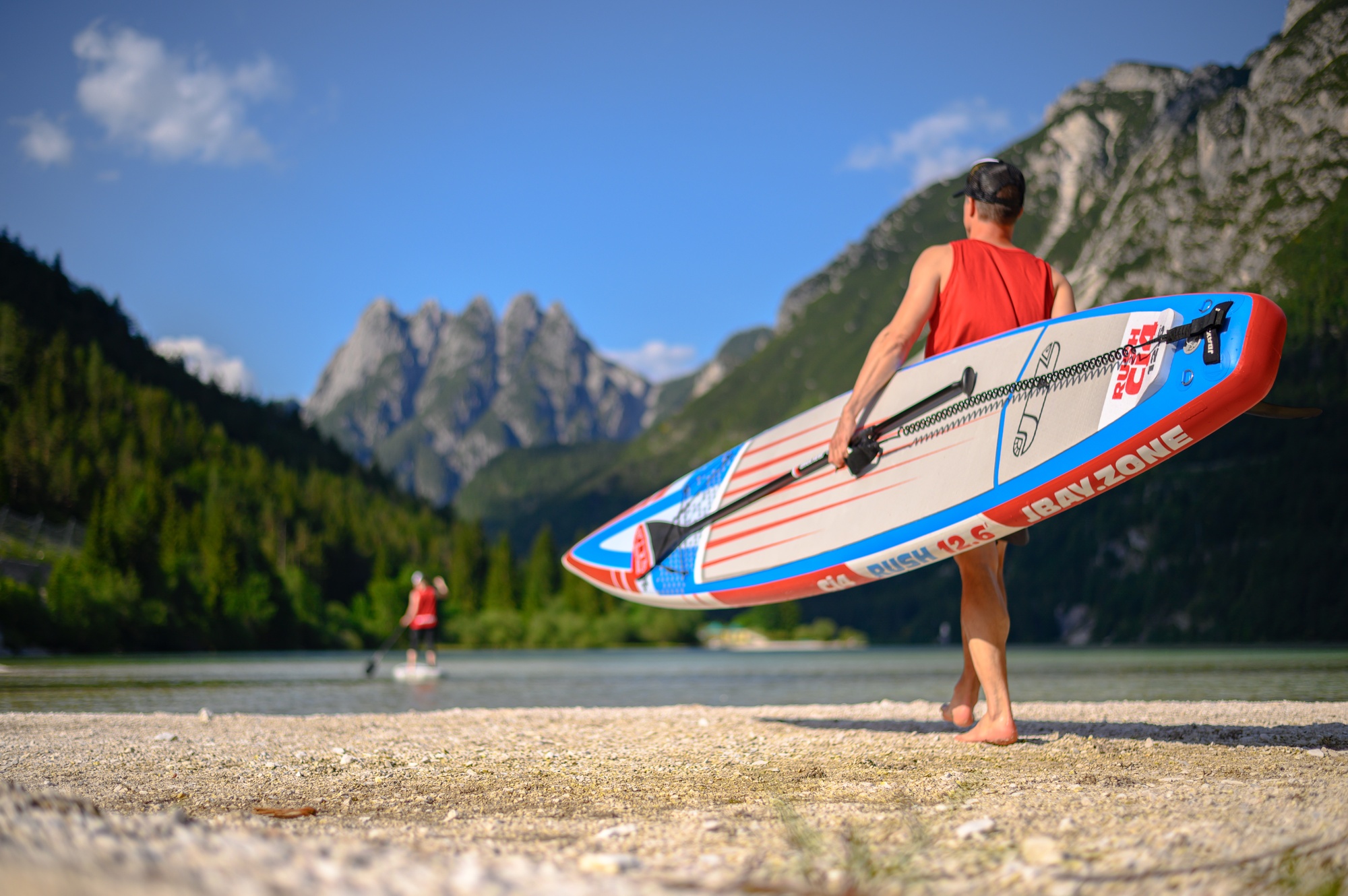
On a paddle board (SUP) you stand and paddle with a single-blade paddle, switching sides. In a kayak you sit and use a double-blade paddle. This difference shapes everything: body position, the muscles you work, stability, speed and the overall experience on the water.
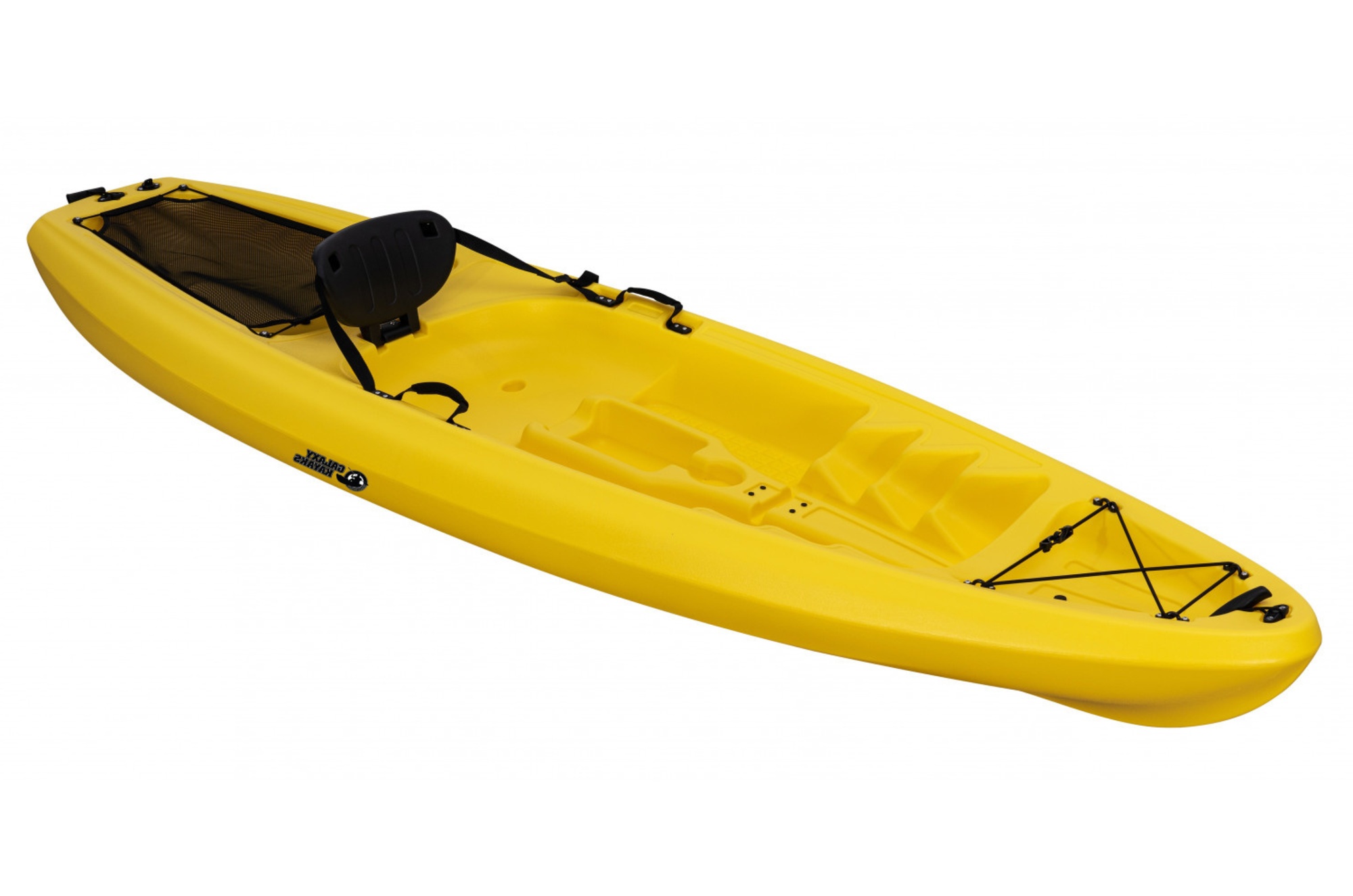
Paddling a board works your whole body: legs, core, arms and shoulders. It is a great workout that is easy on the joints. In a kayak most of the load falls on your arms and shoulders, but the seated position is more stable and less tiring on longer routes.
Transport and storage
Here the inflatable paddle board wins hands down. You let the air out, fold it up and put it in a backpack. The backpack fits in any car trunk, you can carry it on your back to the lake or even take it on a plane.
A kayak, even an inflatable one, takes up much more space. A hard kayak needs a roof rack or a trailer, and you need a garage or a basement to store it. The exception is modular kayaks: VAKA Sport Modular Pro splits into two parts and fits in a car boot. If you live in a city flat, an inflatable paddle board is the most practical choice.
Stability and safety
For beginners a kayak feels more stable, because you sit low and the center of gravity is close to the water. It is harder to fall out of a kayak.
A paddle board takes a little time to get used to balancing, but modern all-round boards (32 inches wide and more) are very stable. Most beginners are standing on the board within the first 10 minutes. And if you do fall, an inflatable board is soft and safe.
Speed and distance
A kayak is faster. Thanks to the lower seating position and the double-blade paddle, you can hold a higher speed with less effort. A kayak also copes better with stronger wind.
A paddle board is slower, but it makes up for it with a better view of your surroundings (you stand higher) and more variety: you can stand, kneel, sit or even lie on the board.
Wind
This matters in Lithuania, where wind is a frequent companion. On a paddle board you stand, and your body acts like a sail. Stronger wind (above 15 km/h) can make paddling much harder and even dangerous.
In a kayak you sit low, so the wind has much less effect. If you plan to paddle on the Curonian Lagoon, along the Baltic coast or on large open lakes, a kayak will be the safer choice on windy days.
Fishing
Both are suitable for fishing, but in different ways. A kayak is more stable and has more room for gear. In a kayak you can fish comfortably for hours.
A fishing paddle board (for example the NRS Heron or JBAY.ZONE Kame KX260 with seat) lets you get close to shallows and spots a kayak cannot reach. But standing and fishing for long periods takes better balance.
Physical benefits
A paddle board works more muscle groups: legs (balance), core (rotation), arms and shoulders (paddling). It is one of the most effective low-impact workouts and suits all ages.
A kayak focuses more on the upper body. The double-blade paddle needs less technique, so it is easier to start, but the workout effect is narrower.
Price comparison
| Criterion | Inflatable board | Kayak |
|---|---|---|
| Entry price (set) | From 149 EUR | From 400 EUR (inflatable) |
| Mid-range price | 300–700 EUR | 800–1,500 EUR |
| Premium price | 800–1,400 EUR | 1,500–4,000+ EUR |
| Transport | Free (backpack) | Roof rack (100 to 300 EUR) |
| Storage | Closet | Garage/basement |
So which to choose?
Choose a paddle board if: you want a light, compact solution; you will paddle on lakes and rivers in calm weather; you want a full-body workout; you live in an apartment without a garage; you are looking for an all-round summer activity for the whole family.
Choose a kayak if: you plan long trips or fishing; you want to paddle on windy days too; you have storage space; you want speed and efficiency. For a family with a child there is VAKA Sport Trio 2+1, and you will find all models in the VAKA Sport kayaks category.
And what if you want both? There are paddle boards with seats (JBAY.ZONE Kame KX260) that let you both stand and sit. It is a good compromise for anyone who wants to try both styles.
Frequently asked questions
Is a paddle board suitable for fishing?
Yes. Fishing paddle boards such as the NRS Heron or JBAY Kame KX260 have mounting points for rods and extra stability. With a seat you can also fish sitting down.
Which is more stable: a paddle board or a kayak?
A kayak is more stable thanks to its lower center of gravity. However, modern all-round paddle boards (32" and wider) are stable enough for most paddlers.
Can you paddle a board sitting down?
Yes. Many paddle boards let you attach a seat. The JBAY.ZONE Kame KX260 already comes with a seat.
Which is better in the wind?
A kayak. Because of the lower seating position, the wind has less effect. A person standing on a paddle board acts like a sail. If the wind in your area often blows above 15 km/h, a kayak will be safer.
Is a paddle board suitable for children?
Yes. An inflatable paddle board is soft and safe. Children from 6 to 7 years old can paddle on an all-round board with an adult, and from 10 to 12 they can paddle on their own on a smaller board, for example the Amber BSB 9.4.
Read also
- How to choose an inflatable SUP board: a beginner's guide (2026)
- How to choose an inflatable paddle board: a beginner's guide
- How to choose your first kayak? 5 questions to ask yourself before you buy
Browse the full paddle board range and kayak range at the VAKA Sport store, or write to [email protected] and we will help you choose.
Recommended products
The most popular products in this category