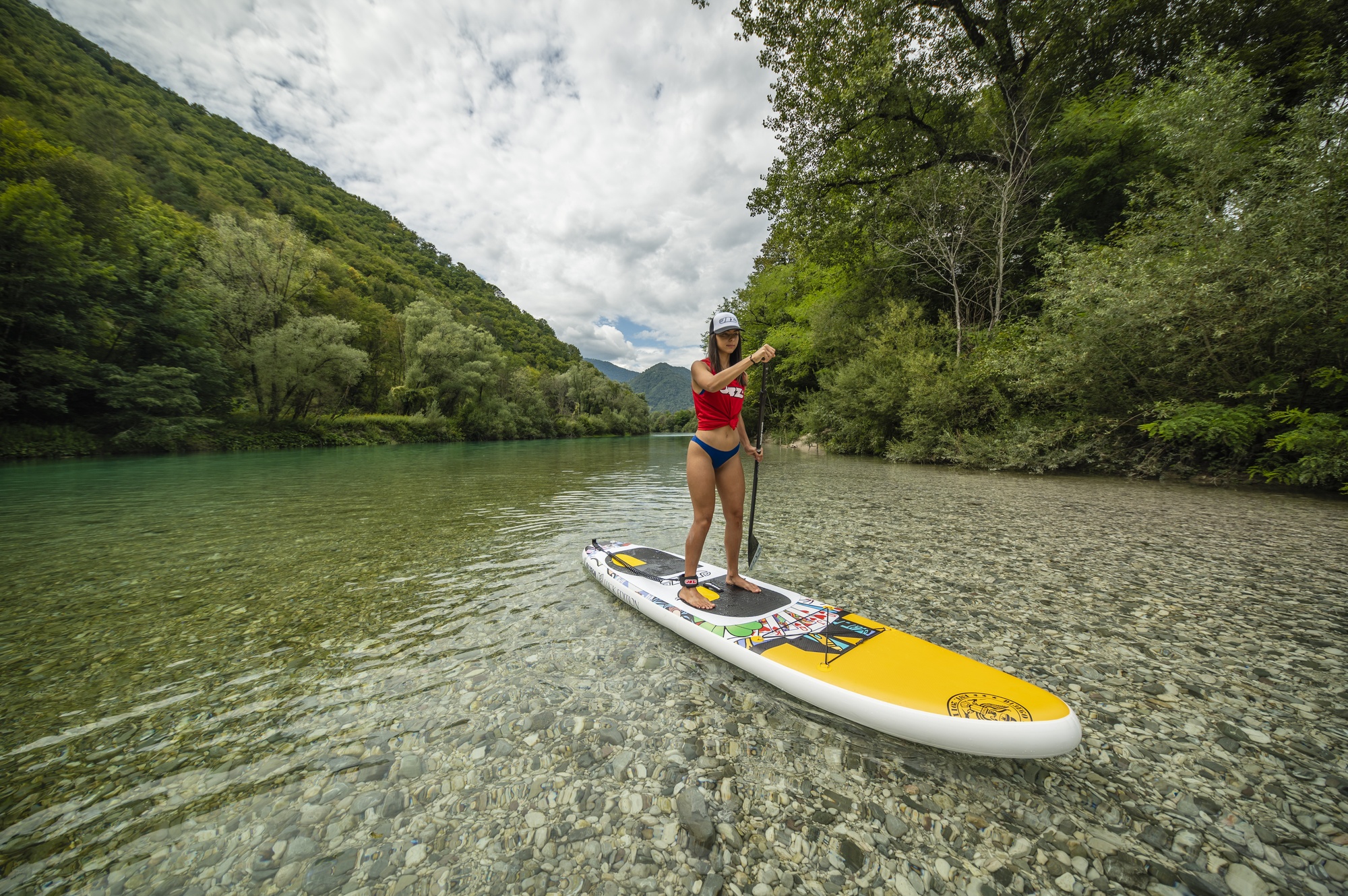
Lithuania has great conditions for stand up paddling. Lakes, rivers, the lagoon and even the sea offer different experiences for paddlers of every level. In this article we describe the best places to paddle a SUP board in Lithuania and give practical tips for each location.
The Trakai lakes
Trakai is probably the most popular SUP spot in Lithuania, and for good reason. The Galvė, Totoriškės and Lukas lakes and many smaller ones form a perfect maze for paddling. The water is usually calm, because the lakes are surrounded by forests and hills that shelter them from the wind.
From Lake Galvė you can reach Trakai Castle and paddle around the islands. Lake Totoriškės is calmer and less visited. Paddling between the lakes through narrow channels gives a real sense of adventure.
Level: suits beginners and intermediate paddlers.
Best time: June to September, early morning or evening (fewer boats).
Tip: on weekends Lake Galvė gets crowded. Choose the Totoriškės or Lukas lakes instead.
Kaunas Reservoir
The Kaunas Reservoir is the largest body of water in Lithuania and offers the full range of experiences: from calm paddling along the shore to a serious workout across the reservoir. It is wide, so wind can raise waves, especially in the northern part.
For beginners we recommend paddling close to the shore, in the bays or on the Rumšiškės side. Experienced paddlers can plan longer routes along the shoreline.
Level: beginners (shoreline), intermediate (open water).
Best time: calm weather, wind up to 10 km/h.
Tip: always check the weather forecast. On the reservoir the wind can pick up suddenly.
The Curonian Spit and Lagoon
The Curonian Lagoon near Nida and Juodkrantė is one of the most beautiful paddling spots in Europe. In calm weather you can paddle the lagoon with a stunning view of the dunes and the forests of the Curonian Spit.
Paddling on the Baltic Sea is possible, but only in very calm weather and for experienced paddlers. Sea conditions change fast, so we recommend beginners stay on the lagoon side.
Level: intermediate (lagoon), experienced (sea).
Best time: June to August, calm weather.
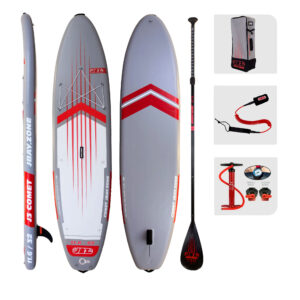
Tip: get a longer touring paddle board (for example the JBAY Comet J3 or NRS Tour-Lite) for longer distances.
Vilnius rivers: the Neris and the Vilnia
The Neris within Vilnius city limits offers unique urban paddling. You can start at the Green Bridge and paddle past Gediminas Castle and through Sereikiškės Park to Verkiai. The current is weak, so paddling is easy.
The Vilnia is narrower and faster, which suits intermediate paddlers who want a little adrenaline. Other Lithuanian rivers, such as the Žeimena, the Minija or the Merkys, are also great for SUP paddling.
Level: Neris for beginners, Vilnia for intermediate paddlers.
Best time: May to September.
Tip: on a river, use a safety leash when paddling against the current.
The Aukštaitija lakes
Aukštaitija National Park is a true paradise for SUP fans. Hundreds of lakes, many linked by channels, with clean, clear water and quiet wooded shores. The most popular spots are Lake Lūšiai, Lake Dringis, Lake Baluošas and Lake Žeimenys.
Here you can plan a touring trip across several lakes, camping on the shores. The compactness of an inflatable SUP board really pays off here, since you can carry the backpack between lakes.
Level: suits everyone.
Best time: June to August.
Tip: register on the national park's website before you arrive.
The Molėtai lakes
The Molėtai district has more than 200 lakes, including Lithuania's deepest, Lake Tauragnas (62 m). The Bebrusai, Sartai and Asveja lakes offer both calm paddling and longer routes.
Level: suits everyone.
Best time: May to September.
Tip: Lake Sartai can be windy, so choose the calmer, smaller lakes if you are a beginner.
Safety tips for paddling in Lithuania
Wherever you paddle, follow these rules:
Always wear a life vest or keep one on the board. Use a safety leash so the board cannot drift away from you if you fall in. Check the weather forecast and wind speed before every outing. We recommend beginners paddle in winds up to 10 km/h and intermediate paddlers up to 15 km/h. Above 20 km/h, do not paddle even if you are experienced.
Tell someone where you plan to paddle and when you plan to be back. Take your phone in a waterproof case. And most importantly, do not rush. SUP paddling is about enjoyment, not speed.
Frequently asked questions
Do you need a permit to SUP in Lithuania?
Generally, no. Inland waters can be used freely. However, some national parks (for example Aukštaitija NP) may have registration requirements or restrictions on certain lakes. Always check local information before you arrive.
Which paddle board is best for trips around Lithuania's lakes?
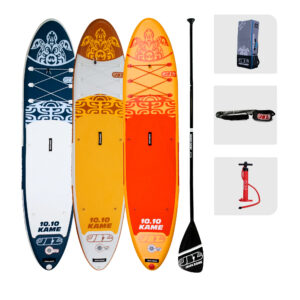
A touring board (11'5" and longer) is the ideal choice. It glides faster on a straight course and holds its line better. We recommend the JBAY Comet J3 (399 EUR) or the WildSup Howling Wolf 12.3 (890 EUR).
Can you SUP on the Baltic Sea?
Yes, but only in calm weather (wind up to 10 km/h, waves up to 0.3 m). We recommend beginners stay on the Curonian Lagoon side. At sea, always wear a life vest and use a safety leash.
Where can you rent a paddle board in Lithuania?
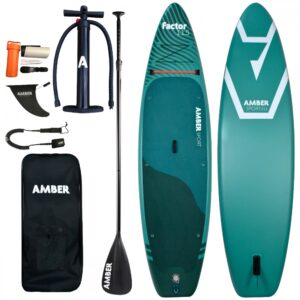
There are rental points in Trakai, Nida, Palanga and many other resort towns. But if you plan to paddle regularly, your own board will pay for itself in the first season. Amber paddle boards from 149 EUR cost less than a few rentals.
What are the most popular SUP routes in Lithuania?
The most popular are the Trakai lakes maze (5 to 10 km), the Neris through Vilnius (10 to 15 km), the Curonian Lagoon shore near Nida (5 to 8 km) and the Aukštaitija lake chain (in several stages).
Read also
- How to choose an inflatable SUP board: a beginner's guide (2026)
- SUP board or kayak: which should you choose?
- Where to kayak in Lithuania: the best places and routes
Get ready for summer adventures: browse the full range of inflatable paddle boards at the VAKA Sport store. We deliver across Lithuania in 1 to 3 business days.
Recommended products
The most popular products in this category