Your first kayak fishing trip is always exciting. A new way to reach spots you could only dream of before. But along with the excitement often come mistakes that are easy to avoid if you know what to watch out for.
Over several years of talking with kayak anglers in Lithuania, I have noticed the same mistakes come up again and again. None of them is anything to be ashamed of. We have made many of them ourselves. But each one costs time or money or, in the worst case, puts your health at risk.
This list will help you skip the painful learning stage and fish smarter from the start. And if you already have experience, you may find one or two things you had not thought of yet.
1. Going out without a life vest
This is mistake number one, and it is potentially fatal. The scenario is always the same: "it is close to shore, just a few meters deep, why would I need a vest". The problem is that accidents do not happen when you expect them. A sudden wind, a cramp, an unexpected capsize, cold water. Even a strong swimmer loses strength in cold water within minutes.
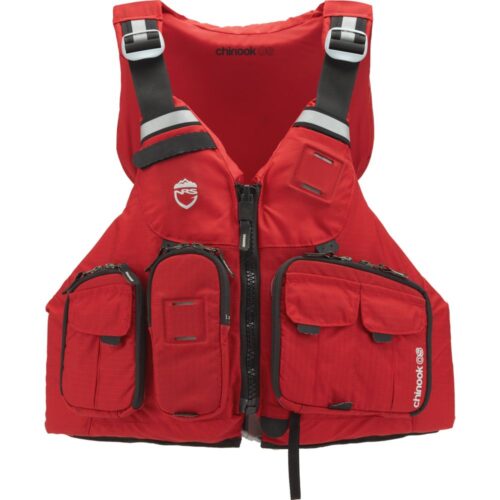
In Lithuania a life vest on the water is required by law. But more important than the law is that it can simply save your life. Vests made specifically for fishing, such as the NRS Chinook PFD, have pockets for lures and D-rings for tools, and do not get in the way of casting. This is not the same as an old-fashioned orange "life jacket".
You will find a more detailed vest comparison in the article on NRS, WALLYS and Baltic Lifejackets vests, and the full safety gear category can be browsed in our store.
2. Too much gear the first time
Beginners' kayaks often look like a floating warehouse shelf. Three spinning rods, two tackle boxes, a backpack of food, a camera, a thermos, spare shoes. The result: the kayak is unstable, you cannot find anything when you need it, and half the gear was not even needed.
For your first trip, one spinning rod, one compact tackle box, water and a phone are enough. That is it. On each next trip you can add one item and you will understand what you really need and what just takes up space.
Once your gear starts to grow, organization becomes critical. The Galaxy tackle bag with 4 boxes helps sort lures and small accessories so everything is within reach. And the YakAttack BlackPak Pro box is great for bigger gear and secures it to the kayak. You will find more about organization in our beginner's guide to kayak fishing gear.
3. Ignoring weather and wind forecasts
The morning is beautiful, the sun is shining, not a breath of wind. Three hours later, in the middle of the lake, a 7 m/s wind picks up and getting back to shore becomes a serious challenge. This happens more often than you think.
Wind is a kayaker's biggest enemy. Even a 5 m/s wind on a lake raises waves that make paddling and fishing harder. 8 m/s or more means it is time to head back for most kayak anglers.
Before every outing, check not only the current weather but also the forecast for the next 4 to 6 hours. Use apps like Windy or yr.no, which show an hourly wind forecast. And always have a plan B. If you were heading for an open lake but the forecast has worsened, have an alternative spot closer to shore.
4. The wrong kayak for fishing
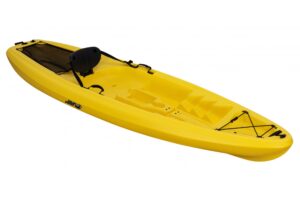
This is a common situation: someone has a touring or recreational kayak and tries to fish from it. The result is disappointing. The kayak is too narrow, moves with every cast, has no rod holders, and the tackle box has to sit between your legs.
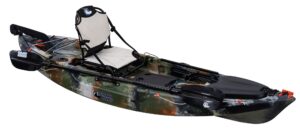
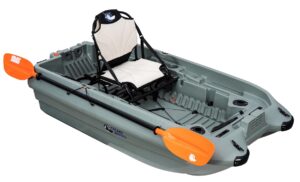
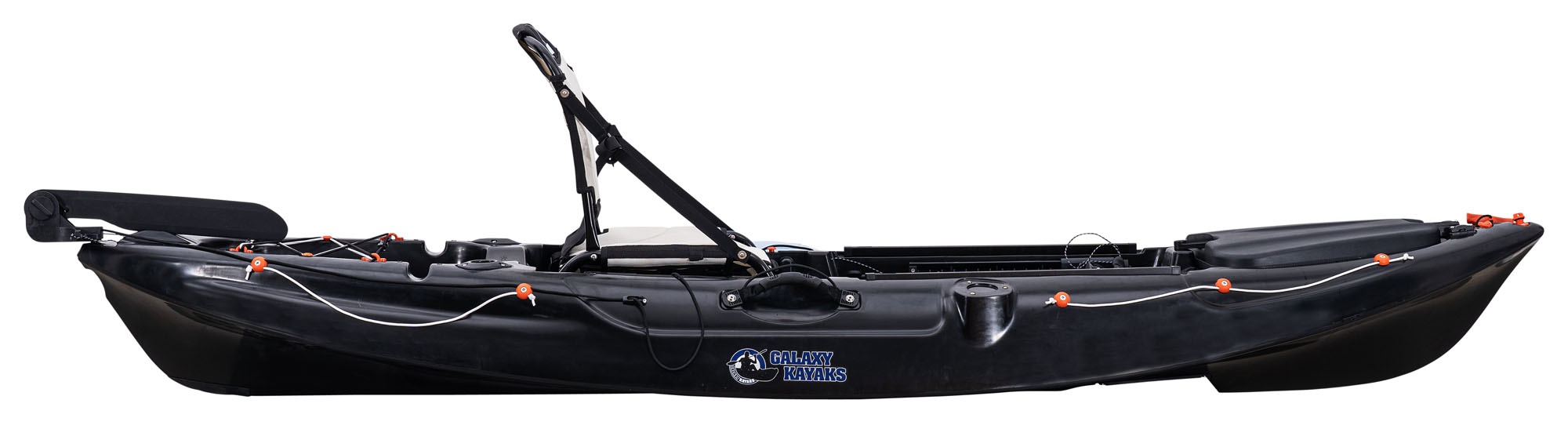
A fishing kayak differs from a regular one in several key ways: a wider hull for stability, integrated rod holders, mounting tracks for accessories and a more comfortable seating layout for long sessions.
If you are just choosing your first kayak, read our guide 5 questions to ask yourself before buying. And you will find a comparison of specific fishing kayaks in the article the best fishing kayak 2026. We recommend looking at the NuCanoe, Galaxy Kayaks and Bonafide range.
5. Standing up in unsafe conditions
Standing in a kayak gives you better visibility and easier casting. But standing in a narrow kayak, in waves or while still moving is a direct route into the water.
If your kayak allows standing (a wide, stable hull), start practicing in calm, shallow water. The first time, it is better to do it on a warm summer day, when a capsize is not a tragedy. Never stand up when there is a strong wind or when you are in fast-flowing water.
If the kayak is not made for it, just stay seated. Better to catch a fish sitting down than to go for a swim standing up. Many successful kayak anglers fish perfectly well without ever standing up.
6. Not knowing self-rescue technique
The kayak has capsized. What next? If you have never tried getting back into a capsized kayak in the water, the first time out in nature will be very stressful. Especially if the water is cold and the shore is far away.
Self-rescue is not complicated, but you need to learn it and practice it from time to time. To start, it is enough to know how to flip the kayak back over and climb on from the water. You can easily try this in a pool or a shallow lake in summer.
On the kayak, always keep a knife in an easy-to-reach place. You may need it if you get tangled in ropes, nets or vegetation. A whistle for signaling is also worth having. All safety gear should not be at the bottom of the kayak but secured so you can reach it even from the water.
7. Not having an anchor
You have found a great spot. The fish are active, the fish finder shows a nice bottom. And you are slowly drifting away. Every minute you have to paddle back, and every movement spooks the fish. Half an hour later you are 50 meters from the spot with nothing caught.
An anchor is one of the most important fishing kayak accessories, but beginners often do not even think about it. With a good anchor system you can stop exactly where you want and focus on fishing, not on positioning.
Anchor Wizard system makes anchoring simple: you let the anchor out with one hand and reel it in with one hand. No struggling with tangled ropes. You will find more about mounting an anchor and other accessories in our kayak rigging guide.
8. Not tethering your gear
A 200-euro spinning rod disappears to the bottom of the lake in a second. So does your phone. Sunglasses, a knife, a fish finder. Anything that is not secured will end up in the water sooner or later.
The rule is simple: if you do not want to lose it, tie it down. For rods, use Railblaza rod holders or flush-mount holders, which hold a spinning rod securely even in waves. Railblaza StarPort mounting system lets you attach various accessories wherever is most convenient for you. The full mounts category can be found in our store.
Keep your phone in a waterproof case, which not only protects it from water but also floats. And put more valuable items in dry bags. Read more about mounting accessories in our accessory mounting guide.
9. Fishing too far from shore without experience
The middle of the lake pulls like a magnet. It seems that huge pike are surely waiting there with no competition. But for a first trip it is a bad plan.
The farther from shore, the bigger the waves, the more strength you need to get back, and the longer help would take if something happened. Start by fishing near the shore. On many Lithuanian lakes the best spots are right in the shoreline zone: reed beds, sunken trees, deep drop-offs close to shore.
Each time you can widen your range a little. First trip, 100 meters from shore. Second, maybe 200. Third, the middle of the lake. But only if the weather allows and you feel confident. You will find the best spots on Lithuanian waters in the article where to kayak in Lithuania.
By the way, getting the kayak to the water also needs some thought. Kayak transport cart comes in very handy if your car cannot drive right up to the shore. You will find more about transport in our transport and storage guide.
10. The wrong clothing for the season
A cotton T-shirt and jeans on a lake in spring sound harmless, but it is one of the most dangerous mistakes. Wet cotton fabric no longer provides any insulation. If you capsize in 10-degree water in cotton clothes, hypothermia can set in within 15 to 20 minutes.
In spring and autumn, wear synthetic or wool base layers. The outer layer should be windproof and waterproof. In summer, light synthetic clothing and sun protection are enough, but still carry a warmer layer as a spare.
And one more often-forgotten thing: footwear. Flip-flops or sandals on a kayak are a bad idea. You need closed footwear that does not mind water. If you have to step out onto a slippery rock or wade through mud, a flip-flop will stay on the bottom.
You will find more about seasonal preparation in the article on seasonal kayak fishing in Lithuania.
Conclusion: learn from other people's mistakes
All these mistakes have one thing in common: they are easy to avoid if you know about them in advance. You do not need to capsize in cold water without a vest yourself to understand that a vest is necessary. You do not need to lose a spinning rod to the bottom of a lake to start using holders.
Kayak fishing is an amazing experience. It gives you freedom, peace and access to spots you cannot reach from shore. But that freedom comes with responsibility. Prepare properly, start slowly and learn something new on every trip.
If you are just choosing fishing gear, we recommend starting with our beginner's guide to kayak fishing gear. And if you are wondering whether a kayak really is a better choice than a traditional inflatable boat, compare the two options here.
Frequently asked questions
Is kayak fishing hard?
No, kayak fishing is not complicated, but it does take some preparation. Paddling itself can be learned in an hour or two. Casting from a seated position may feel unusual at first, but you get used to it quickly. The most important things for beginners are to choose a stable kayak, start in calm water and not go too far from shore. After a few trips, kayak fishing becomes a natural and very enjoyable process.
What should I take on my first kayak fishing trip?
The first time, take only the essentials: a life vest (mandatory), one spinning rod, one compact tackle box, a water bottle and your phone in a waterproof case. No need to bring the whole garage. The less gear, the more stable the kayak and the fewer headaches. On each next trip you can add one accessory as needed. You will find a more detailed list in our beginner's gear guide.
Which kayak is best for a beginner angler?
A wide, stable sit-on-top kayak with integrated rod holders and mounting tracks for accessories suits beginners best. A length of 300 to 370 cm is the optimal range: such a kayak is stable enough and still moves well through the water. Galaxy Kayaks offers good value for money for beginners, while NuCanoe kayaks stand out for exceptional stability. We write more about choosing in our kayak buying guide.
Is it safe to kayak alone?
You can kayak alone, but it takes extra caution. Always tell someone your route and when you plan to be back. Have a life vest, your phone in a waterproof case and at least a basic understanding of self-rescue technique. For beginners, we recommend making your first trips with company or choosing calm waters near towns or villages. Later, with experience and confidence, solo kayak fishing becomes one of the most enjoyable outdoor hobbies.
Read also
- Where to kayak in Lithuania: the best routes and places (2026)
- The 5 most common beginner mistakes when kayaking
- Beginner's guide to kayak fishing gear
Recommended products
The most popular products in this category