
In short: before winter, rinse your kayak and board with fresh water, dry them completely and store them indoors where the temperature does not drop below zero. Keep a plastic kayak on its side or on wide straps, and an inflatable board half inflated or loosely rolled. Remove the electronics and batteries and keep them somewhere warm.
The season is over, and many people simply leave their gear in the garage until May. In spring they find mould in the hatches, a deformed hull or cracked PVC. All of this can be avoided in a single afternoon. In this guide we explain what to do with a plastic kayak, an inflatable board and your accessories, so everything is ready for the first trip of the next season.
| Task | Plastic kayak | Inflatable board |
|---|---|---|
| Rinsing | Fresh water, especially after the sea | Fresh water, especially the valve and fin boxes |
| Drying | Open the hatches and drain plugs | Dry completely before rolling |
| Storage position | On its side or on wide straps | Half inflated or loosely rolled |
| Temperature | Indoors, away from sunlight | Above 0 °C, not next to a radiator |
| Avoid | Lying on its hull on concrete | Long storage folded in the cold |
Why should you prepare your gear for winter?
The main enemies of your gear in winter are moisture, cold and the wrong position. Moisture in a closed hatch or a rolled board turns into mould and a bad smell within a few months. In the cold, PVC becomes brittle, so a folded board can crack along the folds. A polyethylene kayak that rests on one point for a long time can dent, and that dent does not disappear in spring.
How do you prepare a plastic kayak for winter?
- Rinse the hull, deck and hatches with fresh water. This matters most after the sea or the lagoon, because salt and sand damage the seals and tracks.
- Open all hatches and drain plugs so no water stays inside. Leave the kayak to dry for at least a day.
- Remove the fish finder, transducer, batteries, rod holders and seat. Store them separately, dry and warm.
- Store the kayak on its side or on wide straps, upside down. The weight should be spread over several points, not one.
- Protect it from direct sunlight and snow. If the kayak stays outside or under a shelter, use a cover.
A good cover is the Galaxy Kayaks kayak cover, and for Bonafide owners there is the Bonafide kayak cover. We cover how to store and carry a kayak in more detail in our kayak transport and storage guide.
How do you prepare an inflatable board for winter?
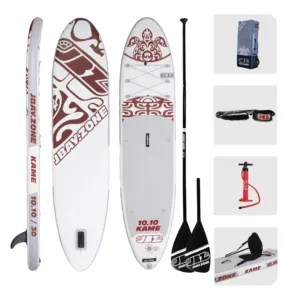
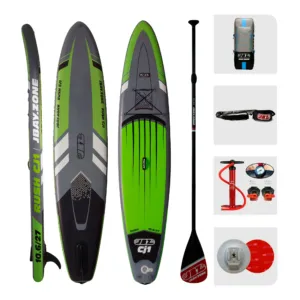
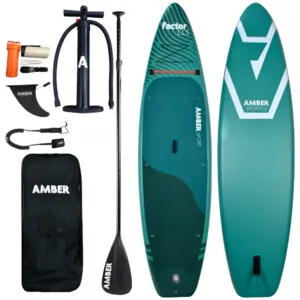
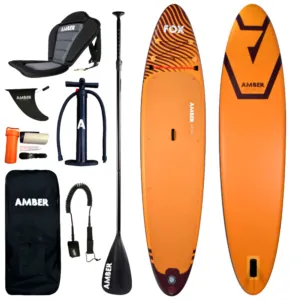
An inflatable board is easier to prepare, but moisture and cold matter most here. Rinse the board, especially the valve and the fin boxes where sand collects. Remove the fins. Dry the board completely on both sides before rolling it, because even a few drops in the backpack cause mould over the winter.
If you have the space, it is best to keep the board half inflated, leaning against a wall or lying on a flat surface. If not, roll it loosely, without sharp folds, and keep it in its backpack indoors above freezing. Do not store it next to a radiator or heater, because heat damages the seams and glue. Take the paddle apart and keep the pump and paddle in the same place, so you do not have to search for them in spring.
If you are still choosing a board for next season, winter is a good time to read our inflatable board guide.

Where do you store gear without a garage?
In a flat, the kayak takes up the most space. A plastic kayak can be stored on its side on a glazed balcony, covered from the sun, or in a storage room on wall brackets. An inflatable board fits in a backpack and a wardrobe, so it is the easiest to keep in a flat. If you store gear in a basement, watch the humidity. In a damp room even dry gear can go mouldy over the winter, so leave the backpack slightly open and check it once a month.
How do you look after life jackets, clothing and electronics?
Rinse life jackets and buoyancy aids with fresh water and dry them hanging, away from heaters. Keep dry suits and wetsuits on wide hangers, not folded. Clean the zips of dry suits and lubricate them with the product the manufacturer recommends, and keep the gaskets out of the sun.
Remove the fish finder, transducer and cables, clean the connectors and keep them dry. Do not store a LiFePO4 lithium battery fully discharged. Charge it to about half and check it every couple of months. You will find more about batteries and mounting in our fish finder guide. For small items and documents, a waterproof bag is handy, for example the NRS Expedition DriDuffel.
What should you check and fix before spring?
Winter is the best time for repairs, because nobody is in a hurry to get on the water. Inspect the seams and valve of your board and patch small punctures with the repair kit from the set. On the kayak, check the track bolts, hatch seals, seat fittings and drain plugs. Check the wheels of your cart, especially if you used it on the beach. If you do not have a cart, winter is a good time to choose one, for example the Railblaza C-TUG.
If you are planning new accessories for spring, winter is also the time to fit them, while the kayak is dry and you have time. We explain how to do it without mistakes in our accessory mounting guide.
Frequently asked questions
Can you leave a kayak outside all winter?
A plastic kayak can handle the cold, but outdoors you should protect it from sunlight and the weight of snow. Keep it upside down, on its side or on supports, and use a cover. Do not keep an inflatable board outside in winter.
Should you store an inflatable board inflated or rolled?
Half inflated is best, because there are no folds and the seams are not under load. If you have no space, roll it loosely and keep it indoors above freezing. Most importantly, the board must be completely dry first.
What temperature damages a PVC board?
Cold makes PVC brittle, so a folded board is easier to crack below freezing. Heat next to a radiator or direct sunlight weakens the glue and seams. It is best to keep it in a cool, dry room.
How do you store a kayak in a garage without a rack?
Lay the kayak on its side on a soft base, such as an old mattress or foam, or hang it on two wide straps. Do not lay it on its hull directly on concrete and do not put other things on top of it.
Do you need to remove the fish finder for winter?
Yes. Remove the screen, transducer and battery, clean the connectors and keep them dry and warm. Charge a lithium battery to about half and check it every couple of months.
When is the best time to repair a board or kayak?
In winter, when the gear is dry and nobody is in a hurry. Patch small punctures with the repair kit from the set, and check the valve, seams, track bolts and hatch seals. In spring you will only need to inflate and go.
Recommended products
The most popular products in this category