Lithuanian lakes and rivers look tempting in early April. The sun is warming, the birds are returning, and your hand reaches for the paddle. But beneath that calm surface lies a serious threat: water temperature. When the air already shows +18°C, the water in Lithuania's inland waters is still only 4 to 8°C. And it is the water temperature, not the air, that determines your safety on the water.
This guide is for everyone who wants to extend the season beyond July and August. Here you will find a concrete action plan: from understanding the risk of hypothermia to clothing choices that let you enjoy the water safely from April to October.
Why cold water is more dangerous than you think
Most paddling and fishing accidents happen not at the peak of summer, but in early spring and late autumn. The reason is simple: people judge the risk by the air temperature, while the real danger lies under the water.
Cold water draws heat from the body 25 times faster than cold air. When you fall into 5°C water, the body reacts drastically:
- The first 1 to 3 minutes cold water shock. An uncontrolled gasp, hyperventilation, panic. This is the deadliest stage: a person can inhale water before even realizing what is happening.
- 3 to 30 minutes progressive cooling. Muscles start to stiffen, swimming weakens, the grip reflex fades. The person can no longer save themselves.
- After 30 minutes hypothermia. Body temperature drops below 35°C, consciousness clouds and heart rhythm disturbances appear.
Many people who die in cold water do not drown from hypothermia. They drown in the first minutes from the cold water shock reaction. This is important to understand, because the right clothing protects you from shock.
The "120 rule": a simple way to assess risk
The American paddling community widely uses the so-called "120 rule": if the sum of the air and water temperatures in Fahrenheit is less than 120°F, you must wear protective clothing against immersion.
Converted to Celsius, the rough threshold is this: when the sum of the air and water temperatures is less than about 50°C, the risk is real. For example, +18°C air and +8°C water give a sum of 26°C. That is well below the threshold, and protective clothing is mandatory in such conditions.
In the Lithuanian context, this means that from the start of the season in April until about early June, and from late September until the end of the season in mid-October, you should think seriously about cold water protection. Even if the air feels like summer during the day.
Before every outing, check the water temperature for the specific body of water. The Lithuanian Hydrometeorological Service publishes water temperature data for the main lakes and the sea. If there is no such data, apply a conservative principle: if in doubt, dress warmer. On the water you can easily cool down by unzipping your jacket, but once you are cold, you have nothing left to warm up with.
Also, always have an emergency plan. Know where the nearest shore is and how you will get there if you capsize. Tell someone where you are paddling and when you plan to be back. In the cold season, such basic rules become vital.
The layering system: how to dress on the water
The right clothing for cold weather on the water follows the same layering principle used by mountaineers and outdoor sports fans. The main difference: everything has to work when wet.
Base layer: moisture management
The first layer touches the skin, and its job is to move moisture away from the body. Merino wool or synthetic material (polyester, nylon) is the best choice. Most importantly: never wear cotton. Cotton absorbs water, does not dry and actively cools the body. Paddlers even have a saying: "cotton kills".
Mid layer: insulation
The mid layer provides warmth. Fleece is the classic, reliable choice: it stays warm even when wet and dries quickly. Depending on the temperature, choose a thinner (100 g/m²) or thicker (200 to 300 g/m²) fleece. On windy days, it is worth choosing a fleece with a windproof layer (windblock).
Outer layer: wind and water
The outer layer has to block wind and spray. Paddling jackets from the NRS paddling apparel collection have sealed seams, wrist and neck gaskets, and a longer front hem that covers you when sitting in a kayak.
A good paddling jacket is one of the best investments if you plan to paddle beyond July and August. It protects you not only from the cold but also from the wind, which on open water feels several times stronger than on shore.
Dry suits vs wetsuits
When the water temperature drops below 15°C, layering alone is not enough. You need specialized protection, and here the choice is between dry suits and wetsuits.
Wetsuits work on a simple principle: water gets under the suit, the body warms it up, and this thin layer of water becomes insulation. They are cheaper, easier to put on and suit moderately cold water (10 to 18°C). However, they do not protect against the initial cold water shock: water getting under the suit still causes a sudden unpleasant sensation.
Dry suits completely isolate you from the water. Under them you wear regular warm layers. This is the highest protection class for serious paddling in the cold season. NRS makes some of the most reliable dry suits on the market, with latex or neoprene gaskets and waterproof zippers.
Our recommendation for Lithuanian conditions: if you only paddle from May to September, a good paddling jacket with neoprene bottoms will be enough. If you start the season in April or continue until October, seriously consider a dry suit.
A life vest in cold water: not optional, but essential
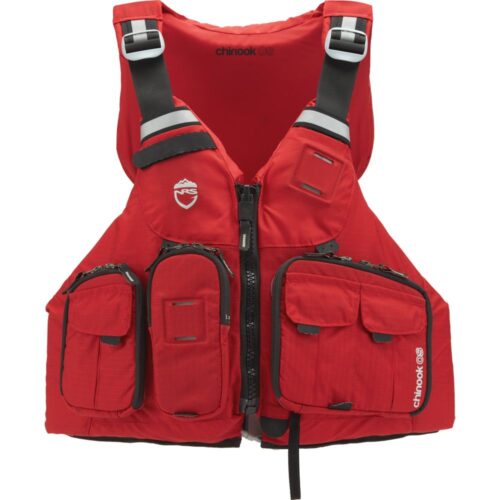
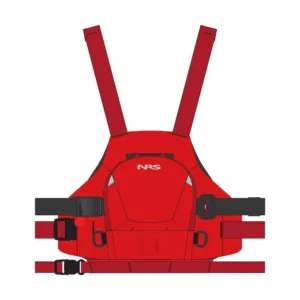
A life vest (PFD) is mandatory in any conditions, but in cold water its importance grows exponentially. The reason is simple: during cold water shock you lose motor control within minutes. If you do not have a vest that keeps you at the surface, even a brief immersion can end tragically.
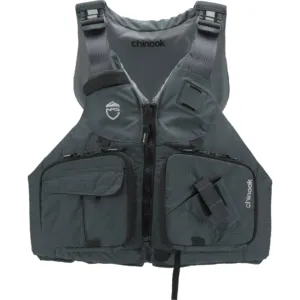
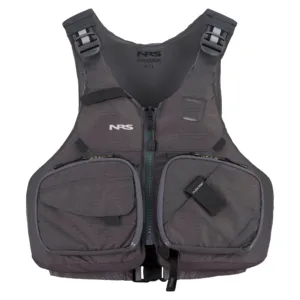
In fishing vests, look for a high buoyancy class (minimum 70N, preferably 100N+), a comfortable cut that does not get in the way of paddling, and enough pockets for gear.
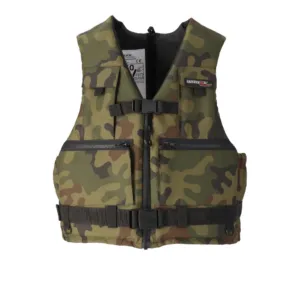
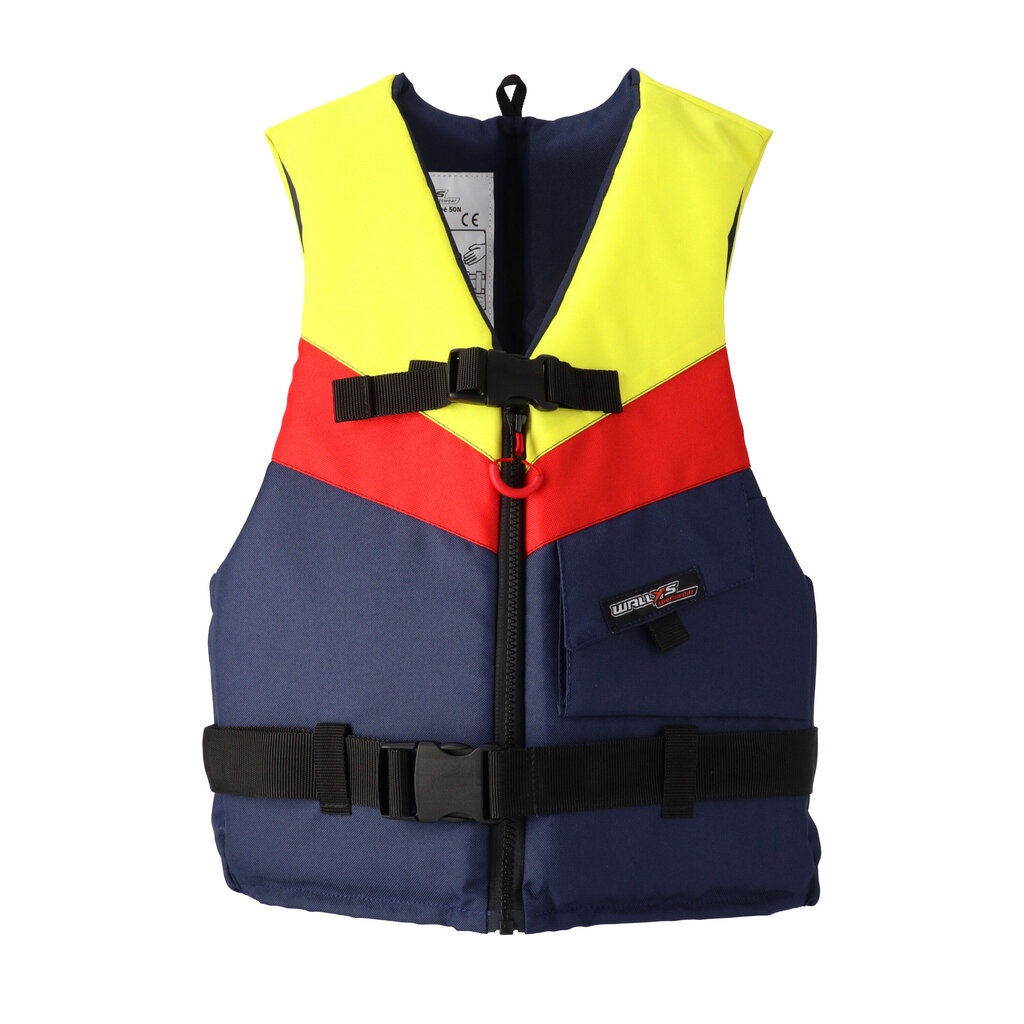
WALLYS life vests offer excellent value for money and are always in our warehouse. They are a reliable choice for both paddlers and anglers, with several models for different needs. If you are looking for a vest made specifically for kayak fishing, with plenty of pockets for lures and tools, NRS Chinook OS Fishing PFD is one of the best choices on the market. It is made for seated paddling, has a flat back and does not restrict movement when holding a rod.
We wrote more about the different models and manufacturers in a separate article on comparing NRS, WALLYS and Baltic Lifejackets vests.
Another thing that is often forgotten: a knife on your vest. The NRS Titanium Pilot knife is compact, rust-proof and easy to reach with one hand. When you need to cut a line or net quickly, it can be vital.
Cold weather accessories: gloves, shoes and pogies
Even with a great suit and vest, you can quickly get cold through your hands and feet. The extremities cool first, because the body directs blood to the vital organs.
Neoprene gloves (2 to 3 mm thick) are the minimum in spring and autumn. They reduce finger sensitivity slightly, but let you paddle and handle a rod. Fingerless gloves suit moderate cold, but in early spring they are not enough.
Neoprene boots with 3 to 5 mm neoprene and a hard sole let you get in and out of the kayak safely. You will not stand barefoot on cold rocks or risk injuring your foot on the bottom.
Pogies special mittens that wrap around the paddle shaft. They let you touch the paddle directly (better control) but protect your hands from wind and spray. A great compromise between warmth and feel, popular with experienced paddlers.
If you fish from a kayak, also consider neoprene shoes with thicker soles to protect your feet. When fishing you often have to stand in shallow water launching or landing the kayak, and slippery rocks and gravel can be dangerous in cold weather, when reflexes slow down.
Do not forget your head. A neoprene cap can noticeably improve comfort, as up to 10 percent of body heat is lost through the head.
Lithuanian season specifics: when it is safe and when it is risky
The Lithuanian climate sets fairly clear limits for the paddling season. A typical season runs from April to October, but the level of risk varies greatly depending on the month.
April and early May: the highest-risk period. Water temperature is 4 to 12°C, and air temperature can swing from +5 to +20°C in a single day. Full protective clothing is essential. Most accidents happen in exactly this period, when people go out for the first time after the winter break.
Mid-May to September: a relatively safe period. The water warms up to 18 to 24°C, but even in summer, on early mornings or after rain, the water temperature can drop. A vest is always mandatory. A light paddling jacket comes in handy on windy days.
Late September and October: the water temperature falls again, and the risk grows every week. In October the water is already 8 to 12°C, and we are back to the same situation as in spring. Anyone fishing from a kayak in this period should wear neoprene or a dry suit.
You will find more about specific fishing seasons and what to fish at different times of year in our seasonal kayak fishing guide. When looking for new places to paddle, check out our list of the best places to kayak in Lithuania.
If you are just starting and want to know what you need from day one, read our beginner's guide to kayak fishing gear.
Frequently asked questions
What clothing do I need for paddling in cold weather?
The minimum kit for cold weather on the water: a synthetic or merino wool base layer, a fleece mid layer, a wind and waterproof paddling jacket, neoprene gloves and shoes, and a life vest. When the water temperature is below 15°C, a wetsuit or dry suit is recommended. The most important rule: dress for the water temperature, not the air temperature.
Can I go kayaking in spring and autumn?
Yes, with the right protection. In Lithuania the spring season usually starts in mid-April, and the autumn season runs until mid-October. In these periods the water temperature is low (4 to 12°C), so protective clothing and a life vest are essential. Never paddle alone in the cold season, and always tell someone your route.
What is hypothermia and how do I avoid it on the water?
Hypothermia is a condition in which the body's core temperature drops below 35°C. It starts when the body loses more heat than it can produce. On the water, hypothermia develops faster, because water draws heat 25 times more effectively than air. Prevention: the right clothing for the water temperature, a life vest (it keeps you at the surface even if you lose consciousness), a warm drink in a thermos, and a plan B: know where the nearest shore is and how you will get there.
Is a life vest enough in cold water?
A life vest is essential, but on its own it is not enough. A vest will stop you from drowning, but it will not protect you from hypothermia and cold water shock. In cold water (below 15°C) you need a full protection kit: thermal clothing (neoprene or a dry suit), neoprene gloves and shoes, a vest, and the knowledge of what to do in an emergency. The vest is the last line of protection, not the only one.
Read also
- Life jackets for kayaks, SUP and sailing: Baltic Lifejackets, WALLYS and NRS compared (2026)
- How to get back into a kayak after capsizing: self-rescue technique (2026)
- Spring on the water: how to prepare for the kayak season?
Recommended products
The most popular products in this category